The widespread application of laser marking machines in the market stems from their ability to mark a diverse range of products, thereby enhancing anti-counterfeiting capabilities. Furthermore, they possess critical functional attributes, such as marking depth and clarity. Why are these two criteria so important? Because if the marking depth produced by a laser marking machine is insufficient, the marks can easily become indistinct, creating opportunities for counterfeiters to run rampant; thus, these two metrics serve as vital performance indicators.
How Can Laser Marking Depth Be Increased?
1. Direct Adjustment: Increasing Laser Power: As is well known, the laser serves as the core functional component of a laser marking machine—much like an engine is to an automobile. Enhancing the quality of the laser source effectively improves the focus and confinement of the laser beam. This implies increasing the laser power output to boost its operational capacity; however, doing so inevitably increases the cost of the machine itself. Nevertheless, the improvement in marking depth is immediate and undeniable. Another point to consider is that as laser technology advances, the corresponding auxiliary equipment and infrastructure must also be continuously upgraded, which can significantly drive up the overall cost of the machine system.
2. Replace the Field Lens: Swap the existing field lens for one with a smaller focal length.
3. Adjust the Laser Beam Optics: This involves adjusting the laser cavity, replacing the beam-guiding materials, or upgrading the laser's total reflector and output coupler mirrors.
4. Reduce Marking Speed: If the laser power and other parameters remain constant, but the marking speed is deliberately reduced, the marking depth will naturally increase slightly. In other words, by slowing down the marking process, you effectively achieve a deeper engraving depth.
5. Upgrade Marking Components: Replacing key marking components—specifically the laser assembly—with high-quality, superior-grade alternatives is an effective method for enhancing performance.
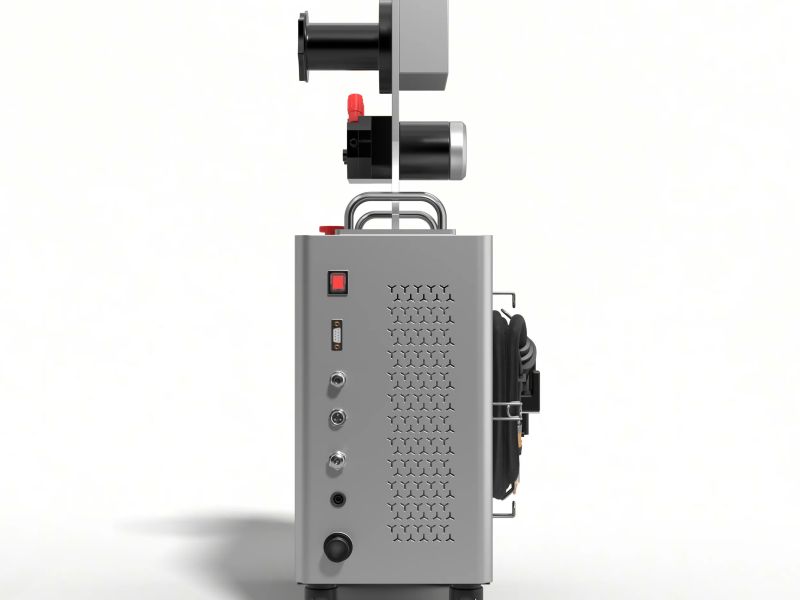
How Can Laser Marking Speed Be Increased?
First, when marking a fixed graphic pattern, the factors influencing marking efficiency can be broadly categorized into two groups: the equipment itself and the material being processed. Consequently, the specific factors that impact marking efficiency include the fill pattern type, the field lens, the galvanometer scanner, and various delay settings.
1. Internal Machine Settings: During the operation of a laser marking machine, its built-in configuration settings constitute the primary internal factors influencing performance. These include the laser frequency, laser spot mode and beam divergence angle, laser power, and the optimization of optical beam shaping—often in conjunction with the use of auxiliary gases or processing agents appropriate for the specific material. Therefore, during the initial selection phase of a laser marking machine model, one should base the choice on the specific material to be processed and the precise process requirements to ensure the selection of the most suitable machine.
2. Fill Density: Given the same marking area, identical spot size, and consistent depth, a higher marking density results in a slower corresponding marking speed. The reason for this is that increased density directly expands the total area requiring marking.
3. Selection of High-Performance High-Speed Galvanometers: While standard galvanometers typically achieve scanning speeds of up to 3,000 mm/s, superior high-speed galvanometers are capable of performing tens of thousands of scans per second. Furthermore, when using standard galvanometers to mark intricate graphics or fine text, distortion is a common issue; consequently, scanning speeds must often be reduced to ensure high-quality results.
4. Marking Area: The larger the designated marking area, the greater the deflection angle required of the laser marking galvanometer and the more extensive the trajectory of the graphic's movement. Therefore, assuming a constant marking speed, completing a large-format marking task takes longer than completing a small-format one.
In practical production environments, balancing marking speed with marking depth depends not solely on adjusting equipment parameters, but is also inextricably linked to the technical support and after-sales guarantees provided by the manufacturer. During operation, users frequently encounter practical challenges arising from the use of diverse materials or specific process requirements; without professional guidance, this can easily lead to inefficiencies or suboptimal marking results.
As an enterprise deeply rooted in the field of laser equipment, Eagle remains steadfastly user-centric. We not only provide our clients with cost-effective laser marking machines but also prioritize offering comprehensive support across key areas—including installation and commissioning, operational training, and process optimization guidance. Through our professional services, we aim to empower users to continuously enhance both efficiency and quality in their daily processing operations, ensuring that every piece of equipment truly delivers its full potential value.
Selecting a high-quality piece of equipment is merely the beginning; consistent and reliable service—coupled with attentive support—constitutes the true guarantee for the long-term growth of entrepreneurs and manufacturing enterprises alike. We look forward to joining hands with our users to ensure that laser marking technology plays an even more significant role across an ever-expanding range of industries.